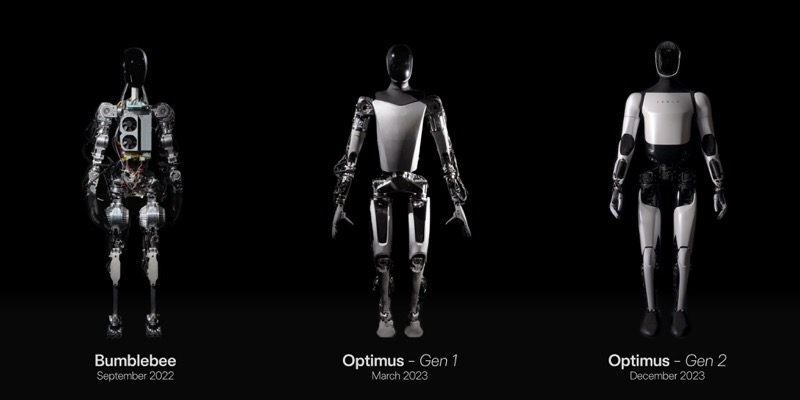
The AI-Driven Manufacturing Revolution – Tesla Optimus Gen 2 and End-to-End Neural Network Control
The robotics industry is witnessing a massive paradigm shift with the rapid iteration of Tesla’s humanoid robot, Optimus. With the introduction of Gen 2, Tesla has moved away from relying heavily on hard-coded, rule-based programming for movement, shifting instead toward an "end-to-end" neural network architecture. This means the robot relies entirely on vision-in, controls-out AI models—processing real-time video data through its advanced neural nets to autonomously generate the precise joint movements required to execute complex tasks, such as delicately handling an egg or folding laundry.
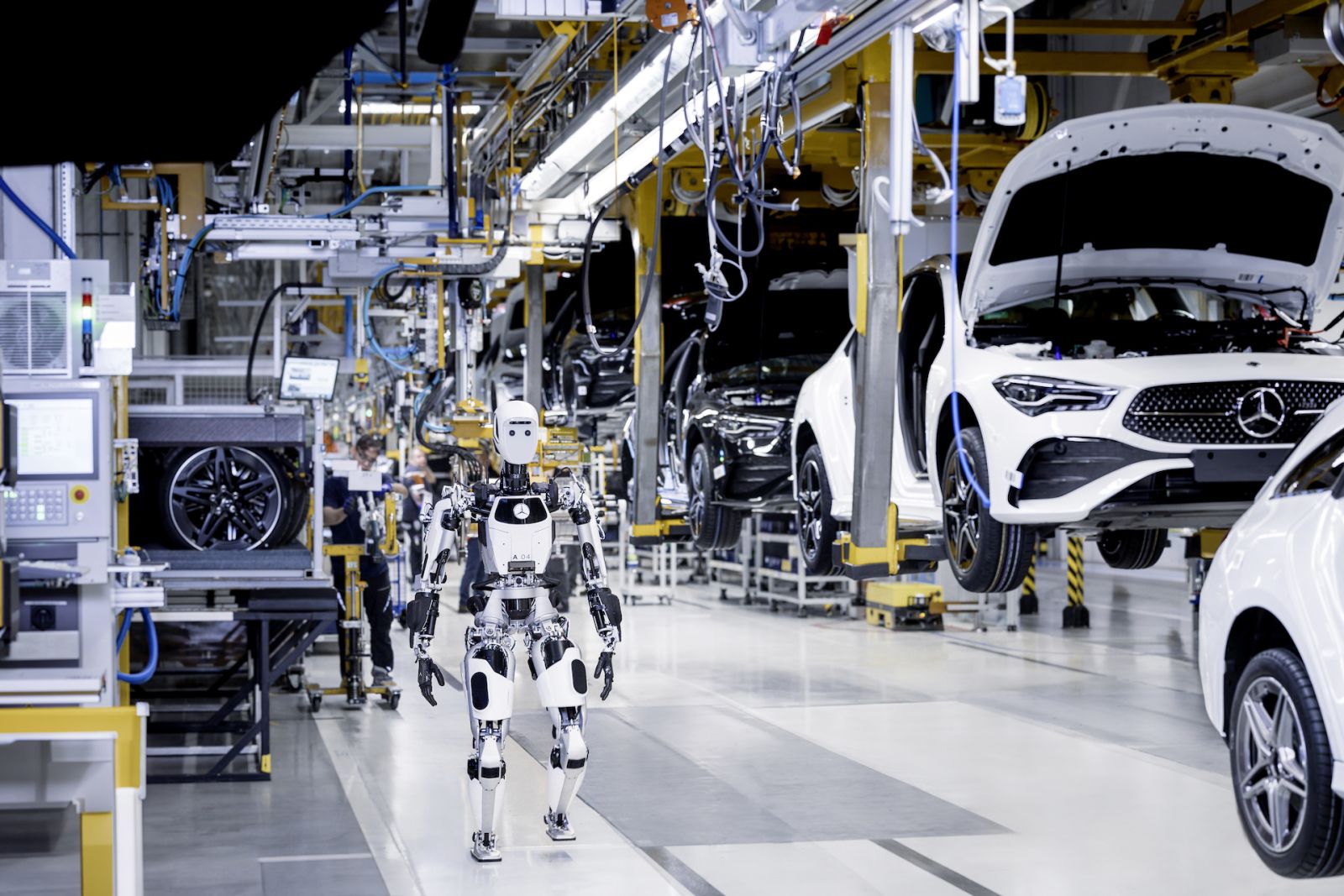
Optimus Gen 2 features completely custom-designed actuators and sensors, resulting in a significantly lighter frame and a 30% increase in walking speed. Most notably, its 11-Degree-of-Freedom (DoF) hands are now equipped with high-resolution tactile sensing across all fingers, granting it a level of fine motor control previously unseen in commercially viable humanoid robots. Tesla's ultimate goal is to mass-produce Optimus for use in their own automotive gigafactories before releasing them into the consumer market for household tasks.
The HDT Testing Perspective: The transition to end-to-end neural network control introduces unprecedented challenges for quality assurance. Traditional manual testing is completely insufficient for robots that "learn" rather than "execute scripts." At HDT, we tackle this by deploying robust Data & Algorithm Testing pipelines.
Because Optimus relies on visual data, our testing protocols involve feeding the AI millions of synthetic edge-case scenarios to evaluate its decision-making under stress. Furthermore, validating the tactile feedback of the 11-DoF hands requires high-precision Kinematics Validation. HDT utilizes advanced Python-based automation scripts and the Robot Framework architecture to run continuous integration (CI/CD) testing on the robot’s firmware. By automating these complex test cases, we ensure that every software update maintains strict safety parameters, preventing catastrophic failures when the robot operates in unpredictable, real-world human environments.
(Source: https://spectrum.ieee.org)